
How snakes move without legs: crawling, rising and showing off
26 November 2026
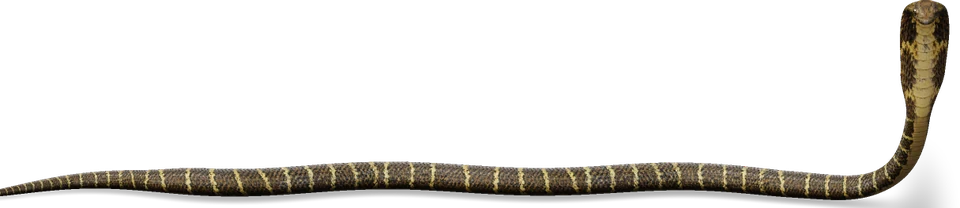
A snake has no legs, yet it can creep, race, climb and rise up off the ground. It does all of it with its spine, its muscles and the broad scales on its belly.
Creeping in a straight line
Heavy snakes such as pythons and anacondas often move almost straight, like a caterpillar. Waves of muscle run backwards along the body: the belly scales are lifted, pulled forward a little and set down again, while the rest of the body holds on. The skin of the belly moves much more than the back. It is slow but quiet and needs little room.
Swinging from side to side
Lighter snakes, like the milk snake, usually curve their body into S-shaped bends and push against the ground behind each bend. That is the classic snake movement, and it can be quick.
Rising up
A cobra can lift the front third of its body off the ground and hold it there, balanced on the rest. When it feels threatened it spreads ribs in its neck to open the hood, which makes it look much bigger. The king cobra, the longest venomous snake, can rise high enough to look a person in the eye.
The tail that looks like a head
Some snakes defend themselves with the other end. The blue Malaysian coral snake has a bright red tail. When it is disturbed it hides its head under its body and raises the red tail, so an attacker strikes the wrong end.
All of it on a taskbar
We used these habits when we made DesktopAlive Snake. The pythons and the anaconda creep with slow waves, the milk snake swings and darts away, the king cobra rises and opens its hood when you touch it, and the coral snake lifts its red tail.